Doors open: wristband colors and the first session brief
Every Saturday, the doors open to families, birthday groups, and teams eager for their session. The front desk becomes the first checkpoint. As guests check in, staff hand out colored wristbands, one color per entry block. This color rotation is more than decoration. It keeps the floor organized, makes crowd control manageable, and allows monitors to spot overstays at a glance.
Before the first hour begins, the opening manager gathers all court monitors and floor staff for a quick session brief. The lead reviews the day's schedule, highlights any special groups (like a field trip or sensory hour), and checks that each monitor is clear on their first rotation. This few minutes sets the tone: rules, coverage needs, where the first aid kit is, and who is on call for escalations.
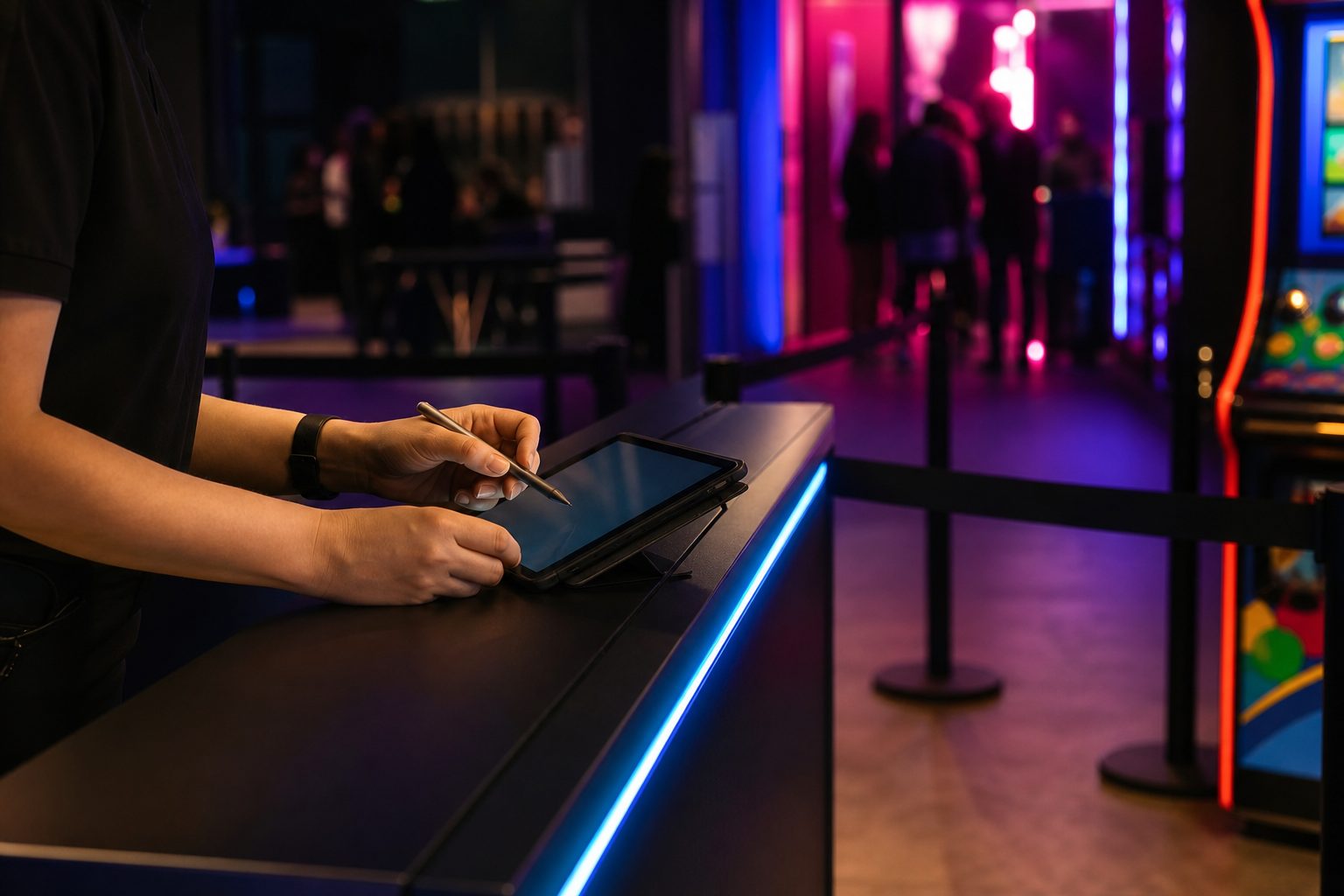
The first guests trickle in, most with waivers already completed online, but some need help at the kiosk. Once checked in, each participant gets a wristband. The color signals which hour they belong to, and when their jump time ends. Staff watch the clock. When a new color takes the court, the old one lines up to exit. This system keeps capacity in check and prevents the lobby from backing up.
Keep reading: Liability Waivers by State: Where Pre-Injury Releases Fail
Court monitor rotations and why stations change on a timer
Court monitors do not stay put all day. Each one follows a rotation schedule, changing stations every fifteen to thirty minutes, depending on the park's policy. This keeps staff alert and prevents burnout. Working the dodgeball court or main arena takes different focus than the foam pit, and monitors need to stay fresh.
A visible clock or a radio call cues the rotation. When the timer buzzes, monitors trade spots: main court to wall trampolines, wall trampolines to foam pit, foam pit to rest, or to refilling the water station. The system works like clockwork on a busy day. It also helps with accountability. If a monitor misses a rule call, the next one will catch it.
Some managers build in a stand-by float. The float steps into any station where a monitor needs a break or if a higher-risk group is on deck. This allows coverage to stay tight, even as traffic ebbs and flows across the hour.
The rules monitors call most: one jumper per trampoline, no double bounce
Court monitors are the voice of safety. They call out two rules more than any other: one jumper per trampoline, and no double bouncing. These rules exist for simple reasons. If two people share a square, they risk collision. If one person lands while another is still bouncing, the force can launch the lighter jumper unpredictably.
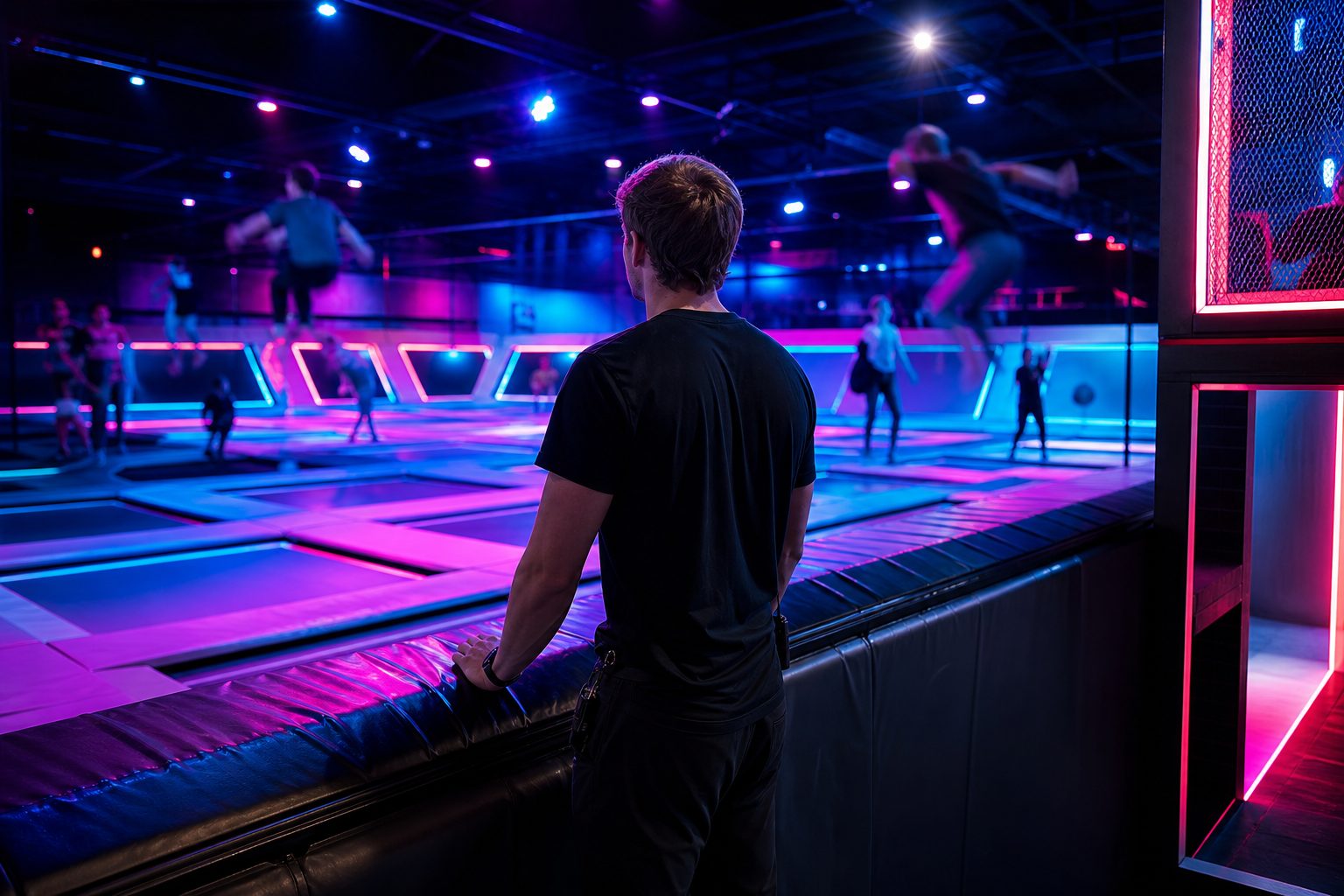
Monitors walk the line between friendly reminders and firm enforcement. From the main court, they scan for siblings sharing a square, or friends tempting fate with a double bounce. Most guests respond to a wave or a sharp "one per square!" Sometimes it takes more, especially with rowdy groups.
Birthday parties and teen groups can be the toughest. A monitor will sometimes have to pause the action, point out the rule, and explain why it matters. If someone keeps breaking it, the monitor can radio for a lead, who may bench the jumper for a few minutes. Every monitor knows that consistent calls keep everyone safer and set expectations for the rest of the session.
Keep reading: Parental Waivers for Minors: The Woodman v. Kera Lesson
Foam pits and airbags: what maintenance looks like between sessions
Foam pits and airbags draw a crowd, but they are also the hardest to keep clean and safe. Every session, monitors check the pit. They scan for lost socks, hair ties, jewelry, or anything that could be a hazard. Between group blocks, it is standard to rake the foam, spread the blocks evenly, and check the depth. Staff use a long-handled tool to pull settled foam from the edges back to the center.
Airbags, used for stunts or flips, need a different check. Monitors walk the mat, feeling for low spots or wrinkles. The air pressure system gets a quick glance to confirm the blower is running and holding steady. Any sign of a tear or a soft corner means the feature comes offline until fixed.
If a child drops a phone or glasses in the pit, the next session's start may be delayed. The monitor radios for a quick search, and sometimes it takes an extra set of hands to sweep the foam. Staff know the routine. Quick turnover depends on these checks running smoothly, and guests usually appreciate the attention to safety.
Toddler time, height splits and keeping session types apart
A trampoline park is not just one big free-for-all. The schedule includes slots for toddler time, open jump, and sometimes adult fitness or dodgeball leagues. Keeping these groups apart is a constant challenge. For toddler time, only kids under a certain height or age are allowed. Staff use wristbands or stamps to spot who belongs. The music is lower, and monitors walk closer to guide parents and prevent collisions with bigger kids.
During mixed sessions, monitors keep an eye on height splits: under 48 inches, for example, may have a dedicated zone. Some parks use divider mats or cones. Others have color-coded vests or secondary wristbands. Monitors act as referees, gently redirecting anyone in the wrong area.
The need to separate session types also applies to special groups or buyouts. If a youth team rents the dodgeball court, the monitor at that station becomes a gatekeeper, checking wristbands and confirming the group roster. Managing these splits is about more than fairness, it is about preventing accidents between age groups with very different jumping styles and risk awareness.
See how BookAndWaive handles this for attractions and entertainment
Incident documentation in the ten minutes after it happens
No shift is complete without at least one scraped knee or twisted ankle. When an incident happens, the clock starts for staff. The first job is to get the participant to a safe spot and assess the need for first aid. The monitor radios for the shift lead, who brings the incident binder or tablet to the scene.
The lead gathers details: who, what, where, and when. They record the participant's name, age, and contact information, as well as a description of what happened and which rule (if any) was involved. If the injury requires more than a bandage or ice pack, parents are brought in and, if needed, outside medical help is called. Photos of the site and equipment are taken, if the policy calls for it.
The goal is clear documentation, both for internal review and for insurance if it comes to that. Staff use a checklist to ensure nothing is missed: time of incident, witnesses, equipment involved, and actions taken. Digital systems have sped up this process, allowing leads to take notes and upload them before moving to the next task. In most parks, the paperwork must be finished within ten minutes, before memories fade and the court gets busy again.
Session turnover and the walk the closing manager does
Each session ends with a ten-minute warning. Monitors call out, "Yellow bands, finish your jump!" As the clock hits zero, staff guide outgoing participants to the exit, making sure no one lingers or sneaks back in. The desk team cross-checks wristbands at the exit to confirm everyone has left on time.
Between sessions, staff pick up stray shoes, water bottles, and lost property. They wipe down high-touch areas on the mats and railings. The foam pit and airbags get a quick reset. Meanwhile, the next set of guests lines up in the lobby, ready for check-in. If a session ran heavy or an incident slowed turnover, the manager steps in to help reset the floor for the next group.
When the day winds down, the closing manager walks the entire park. They check all courts, pits, and equipment for damage or wear. Incident reports are reviewed for follow up. The last task is to lock up waivers and participant lists, paper or digital, before the doors shut for the night.
Running a trampoline park on a busy Saturday depends on tight systems and clear roles. From wristband checks to incident documentation, every step is designed for safety, speed, and accountability. Combined booking and digital waiver tools that track per participant signatures and handle check-in scanning help staff focus on the floor, not the paperwork pile. This lets owners and managers spend more time on training and guest experience, and less on manual follow up after the rush.